L'Enclume
CartmelSimon Rogan's three-star kitchen in a 13th-century Cumbrian smithy, paired with a private morning tour of the farm that grows almost everything on the plate.

The Fat Duck is not a meal — it is a narrative you happen to eat. Hidden behind a plain whitewashed façade on the high street of Bray, a village of fewer than 9,000 people west of London, Heston Blumenthal's three-Michelin-star restaurant runs a single set menu that follows one day of an imagined childhood: waking up, travelling to the seaside, getting lost in a forest, and finishing in a sweet shop. Every course is a chapter, and the floor team are the storytellers.
Our tour covers the restaurant's full narrative tasting menu — currently served as "The Journey" — together with a personalised itinerary map of your route through the story and a souvenir memento taken from the closing "Sweet Shop" sequence. The meal itself runs three to four hours; we plan the surrounding day so that nothing — parking, timing, the drive back — competes with it.
What makes this the most talked-about restaurant experience in the United Kingdom is the deliberate use of sound, scent, temperature and memory alongside flavour. Dishes arrive with headphones, with vapour, with objects, and occasionally with instructions. Nitro-poached aperitifs are made at the table. "Sound of the Sea" is served with a conch shell and a soundtrack of gulls and waves. It is playful, but the technique underneath is ruthlessly precise — this kitchen has been refining these ideas since 1995.
Book far ahead. Tables are released in monthly batches and disappear within hours; we hold allocations so that your date is confirmed before you plan travel around it.


Everything below is scheduled and confirmed before you travel. Timings are the recommended defaults and can be adjusted to your arrival.
We recommend arriving in the village at least ninety minutes early. Bray is small, pretty and walkable; the Thames path and St Michael's churchyard are two minutes from the door. The restaurant has its own car park directly opposite the entrance.
Coffee at a village café and a short briefing from your Food Adventure host: what to expect, what not to photograph, how the story unfolds, and why you should arrive hungry but not starving.
You are greeted by name and shown to the table. The room is deliberately understated — low ceilings, muted tones, no visual noise — so that all attention sits on the plate and the narrative.
The menu opens with the nitro-poached aperitif prepared tableside, followed by a sequence of small, cold, aromatic bites designed to reset the palate and set the tone of curiosity.
The centrepiece of the meal. "Sound of the Sea" arrives with headphones inside a conch shell; the sea soundtrack measurably changes how the seafood tastes. This is the course most guests remember for years.
Deeper, darker, warmer flavours — mushroom, moss, smoke and game — served as the story moves inland. The lighting and pacing shift with it.
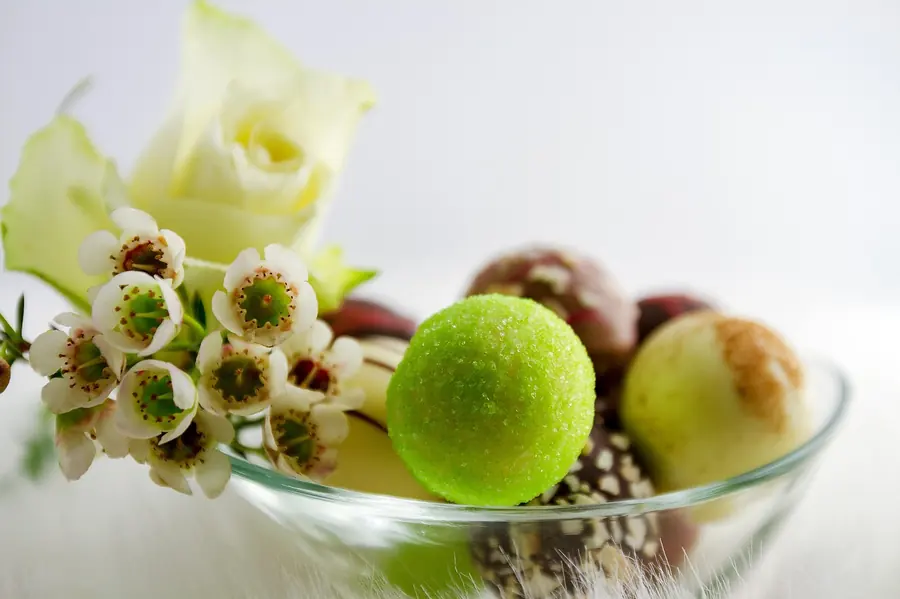
The finale. A miniature confectionery counter is brought to the table and you choose your own closing bites, wrapped to take home as a memento.
Your personalised map of the journey is presented as you leave. We schedule your return transfer for 17:15 so the meal is never rushed at the end.
| Price | £550 per person |
|---|---|
| Duration | 1-Day Experience |
| Chef | Heston Blumenthal |
| Style | Multi-sensory storytelling menu |
| Location | Bray, Berkshire, England |
Most restaurants sell you dinner. The Fat Duck sells you a memory it builds in front of you. When Heston Blumenthal reopened the restaurant in 2015 after a temporary relocation to Melbourne, he threw out the classic tasting-menu format entirely and replaced it with a single day-long narrative arc. You are not choosing dishes; you are being told a story in seventeen instalments, and the plates are the sentences.
That is why we treat this as a full-day tour rather than a reservation. The meal deserves an unhurried approach, a clear head, and no meeting in the diary afterwards.
Bray is a Thames-side village of flint cottages and pub gardens, and the restaurant does almost nothing to announce itself. There is no signage of any consequence, no visible kitchen, and no attempt at grandeur. Inside, the dining room seats around forty across low-beamed spaces in muted greys and creams — a deliberately quiet stage.
The restraint is strategic. With nothing competing visually, every arriving plate, aroma and sound lands with far more force than it would in a decorated room.
The opening act is cold, aromatic and quick: nitro-poached aperitifs prepared at the table, then a run of small bites that wake the palate rather than fill it. The pacing is fast at first, deliberately so — it signals that this will not be a conventional procession of protein and sauce.
By the middle of the menu the tempo slows. Courses become warmer, richer and more technical, and the service team begin explaining less and letting the dishes speak. Expect at least three moments where the method of eating is itself part of the course.
"Sound of the Sea" is the single most influential restaurant dish created in Britain this century. Seafood, edible "sand" and sea vegetables are served on a glass-topped box of sand, with a conch shell containing a hidden audio player. With the sound of waves and gulls in your ears, the seafood reads noticeably saltier and fresher — a documented effect the kitchen exploits deliberately.
The other landmarks: the nitro aperitif, the hot-and-iced tea served at two temperatures in one cup, and the closing sweet-shop counter with its wrapped confectionery to take home.
At £550 per person before drinks, this is among the most expensive meals in Europe, and it is fair to ask what you are buying. The honest answer: you are buying research, staging and rehearsal as much as ingredients. If you want maximum flavour per pound, other restaurants in our catalogue — The Sportsman in particular — deliver more.
If you want the experience that redefined what a restaurant can be, there is no substitute. Guests who go in expecting theatre leave delighted; guests who go in expecting a very good dinner sometimes leave puzzled. We brief you accordingly.
Tables open in monthly release windows and are typically gone the same day. Food Adventure holds allocations across the year, so tell us your preferred month rather than a single fixed date and we will confirm before you book travel. Deposits are taken by the restaurant at the time of reservation and are credited against the final bill.
Lead time we recommend: three to five months for weekends, six to eight weeks midweek.
The Fat Duck is in Bray, Berkshire, England. Nearest transport: Maidenhead station (Elizabeth line) · M4 J8/9.
Full driving directions, parking notes and rail or ferry timings are included in the briefing pack we send seven days before you travel.
Yes. The Fat Duck accommodates most allergies, vegetarian diets and religious requirements, but the menu is built as a narrative so substitutions must be agreed well ahead. We collect your requirements at booking and confirm them with the kitchen at least 14 days before your date.
The restaurant offers wine pairings alongside a full wine and drinks list, priced separately and confirmed with you before the date. The pairing is genuinely well matched to the narrative but it is not essential — guests who prefer to stay clear-headed through a long sensory menu often take a single glass or the non-alcoholic option instead.
Take the Elizabeth line or a GWR mainline train from London to <strong>Maidenhead</strong>, then a short taxi to Bray. We include the return taxi in the package when you choose the no-car option. If you drive, the restaurant has its own car park directly opposite.
The restaurant does not recommend the experience for children under 10 and offers no separate children's menu. In practice the menu suits older children and teenagers far better, and the full price applies regardless of age.
Simon Rogan's three-star kitchen in a 13th-century Cumbrian smithy, paired with a private morning tour of the farm that grows almost everything on the plate.
Thirty-plus courses cooked over fire, at volume, on the Dyfi estuary — Gareth Ward's two-star Welsh kitchen is the loudest and most uncompromising meal in Britain.
Tom Kitchin's Michelin-starred Leith dining room turns North Sea seafood and Highland game into classical French plates — with a map showing exactly where each ingredient came from.
Tell us your dates and we will confirm availability, dietary requirements and the full itinerary within two working days.